

How Can Smarter Security Help Public Spaces Respond Faster?
Government | Security Solutions
Government buildings and public spaces need security systems that do more than record what happened. They need connected tools that help teams see what is happening, respond quickly, and protect the people, places, and services their communities depend on.
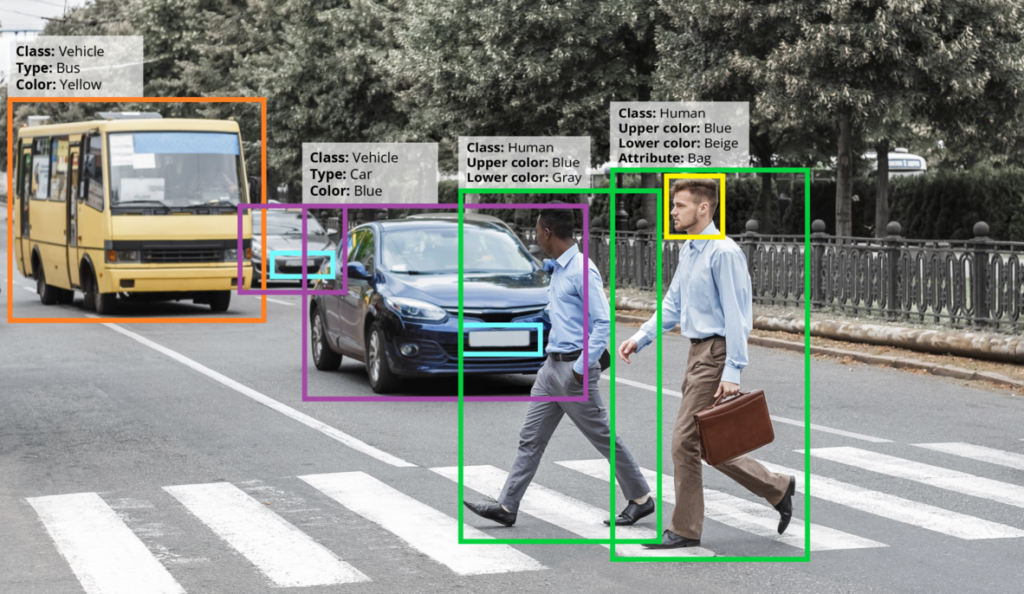
Modern public sector security brings together video surveillance, intelligent analytics, emergency communication tools, monitoring systems, and network infrastructure into a more coordinated environment. For municipalities, schools, transit areas, parks, administrative buildings, and other public spaces, that combination can improve visibility, support faster response, and help public safety teams make more informed decisions.
LDI Connect’s Security Solutions for government and public spaces are designed around that need: helping teams see what others miss and respond before situations escalate.
What are Security Solutions for Government and Public Spaces?
Security solutions for government and public spaces are integrated systems that help public sector teams monitor activity, communicate during incidents, investigate events, and protect shared environments.
These solutions may include network cameras, video analytics, audio tools, emergency communication systems, license plate recognition, searchable footage, and the cabling or network infrastructure that connects everything.
Unlike a standalone camera system, an integrated public sector security solution is designed to support visibility, response, coordination, and accountability across multiple locations.
That matters because public spaces are complex. A city hall, school entrance, park, transit stop, parking area, and municipal operations facility all have different security needs. But they often share the same core challenge: teams need to understand what is happening quickly enough to act.
Why Public Sector Security Needs are Different
Government and public spaces are not controlled environments in the same way private offices often are. They may serve employees, visitors, vendors, students, residents, and emergency personnel, sometimes all in the same day.
That creates several challenges:
- High foot traffic in public-facing buildings and shared spaces
- Open access areas where visibility is important but constant in-person monitoring is difficult
- Multiple sites spread across a city, district, county, or agency
- Limited staff resources for continuous monitoring and response
- Public accountability requirements when incidents occur
- A need for reliable records to support investigations, reporting, and decision-making
The goal is not just to watch more areas. The goal is to make security information easier to interpret and easier to act on.
How Video Surveillance and Analytics Improve Visibility
Modern video surveillance gives teams a clearer view across public spaces such as municipal buildings, streets, parks, transit areas, schools, and parking lots. When paired with analytics, those systems can help identify activity that may need attention.
Video analytics can help teams detect patterns, movement, vehicles, people, or unusual activity more efficiently than manual monitoring alone. Instead of relying only on someone to watch every camera feed in real time, analytics can help surface what may require review.
For public sector teams, this can support:
- Faster awareness of potential incidents
- Better visibility across multiple public spaces
- More efficient monitoring with limited staff
- Stronger situational awareness during active events
- More useful footage when an incident needs review
This is especially important in environments where one missed detail can slow down response or complicate an investigation.
How Emergency Communication Tools Support Faster Response
Security systems are most valuable when they help people act. Cameras can show what is happening, but connected communication tools help teams respond.
Emergency communication and response tools may include network audio, intercoms, alerts, monitoring platforms, and connected devices that help teams communicate with staff, visitors, public safety personnel, or people in the affected area.
In a public space, this can help teams:
- Share live or pre-recorded messages
- Guide people during an incident
- Coordinate resources more effectively
- Communicate across buildings or outdoor areas
- Support a faster, more organized response
For example, if a team sees an issue developing near an entrance, parking area, or public gathering space, connected audio and monitoring tools can help them communicate before the situation grows.
How Searchable Video Supports Investigations
After an incident, teams need accurate information quickly. Searching through hours of footage manually can slow down investigations and place extra strain on public safety or facilities teams.
Searchable video tools help teams find relevant footage faster. Depending on the system, teams may be able to search by time, location, motion, object type, vehicle activity, or other criteria. License plate recognition can also support investigations involving vehicles, parking areas, restricted zones, or traffic-related concerns.
For government agencies and public sector organizations, searchable video can help:
- Accelerate incident investigations
- Provide reliable footage for review
- Support law enforcement or internal security teams
- Improve reporting and documentation
- Inform safer decisions moving forward
The value is not just in having footage. The value is being able to find the right footage when it matters.
Why Network Infrastructure Matters for Public Safety Technology
Security technology depends on the infrastructure behind it. Cameras, analytics, audio tools, intercoms, access control devices, and monitoring platforms all need reliable connectivity to work properly.
That is why network infrastructure is an important part of any public sector security plan. A system may include high-quality cameras and advanced analytics, but if the network cannot support them, performance can suffer.
Strong infrastructure helps ensure that security systems are:
- Reliable across multiple locations
- Scalable as needs grow
- Easier to manage centrally
- Better prepared for high-volume video and data
- More dependable during critical moments
For government and public spaces, this is especially important because security systems often need to support both indoor and outdoor environments, multiple buildings, and long-term operational needs.
What Should Government Agencies Look For in a Security Solution?
When evaluating security solutions for government buildings and public spaces, agencies should look beyond individual devices. The strongest systems are designed around the full security environment, from visibility and communication to investigation and infrastructure.
1. Can the system improve visibility across multiple spaces?
A public sector security system should help teams monitor important areas such as entrances, parking lots, municipal buildings, public gathering spaces, streets, parks, schools, and transit areas.
2. Does it support faster response?
Security tools should help teams detect incidents, communicate clearly, and coordinate resources quickly.
3. Can teams search footage efficiently?
Searchable video and license plate recognition can reduce the time it takes to investigate an event and gather useful information.
4. Is the system supported by reliable network infrastructure?
The best security tools still depend on strong connectivity, proper installation, and scalable infrastructure.
5. Can the solution grow with the organization?
Municipalities, school districts, agencies, and public sector organizations may need to expand coverage over time. A scalable approach helps avoid fragmented systems and disconnected tools.
How Integrated Security Supports Safer Public Spaces
Integrated security solutions help public sector teams move from reactive monitoring to more proactive awareness. Instead of reviewing footage only after something happens, teams can use connected tools to improve visibility, communicate faster, and support better decisions in real time.
For public spaces, that can mean:
- Clearer views of high-traffic areas
- Faster detection of suspicious activity or safety concerns
- Better coordination during emergencies
- More efficient investigations
- Stronger protection for people, property, and public services
- A more connected approach across buildings, departments, and locations
Security is not only about preventing worst-case scenarios. It is also about helping public sector teams operate with confidence every day.
The Bottom Line
Government agencies and public sector organizations need security systems that help them see clearly, respond quickly, and make informed decisions. A modern approach brings together video surveillance, analytics, emergency communication tools, investigation support, and network infrastructure into one connected security strategy.
For municipalities, schools, transit environments, parks, and public buildings, that kind of visibility can make a real difference. It helps teams protect the spaces people rely on, support public safety efforts, and respond before situations escalate.
To learn more about Security Solutions for government and public spaces, contact your LDI Connect Account Representative or visit myLDI.com/solutions/security.