

Is Your Business Phone System Holding You Back?
Cloud Communications | Cloud Services
Many organizations rely on phone systems that once worked well but now limit flexibility, responsiveness, and growth. As workplaces evolve and customer expectations rise, legacy phone systems often struggle to keep up.
This is especially true for businesses still relying on on-premise communications infrastructure, which was never designed to support hybrid work, modern collaboration, or AI-driven insights.
What Is UCaaS (Unified Communications as a Service)?
Unified Communications as a Service, or UCaaS, is a cloud-based communications model that brings voice, video, messaging, and collaboration tools together in one platform.
Instead of managing physical phone hardware and separate systems, UCaaS delivers business communications through the cloud. This approach closely aligns with cloud services strategies for modern businesses, where scalability, flexibility, and continuous updates are built into the platform.
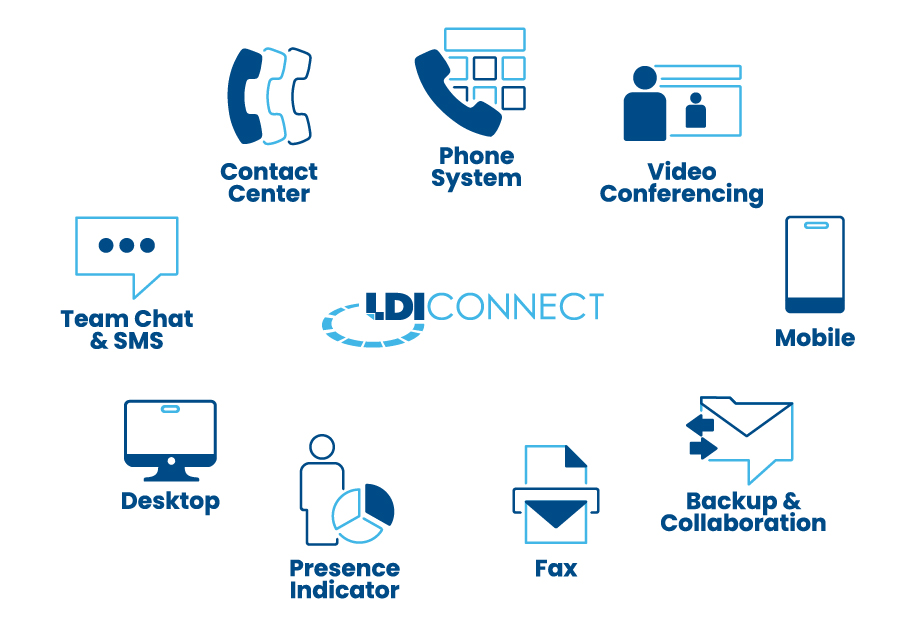
Modern UCaaS platforms typically include business calling, chat, video conferencing, business texting, file sharing, and secure storage, delivered through a single, unified experience.
Why Businesses Are Moving Away From On-Prem Phone Systems
Traditional on-premise phone systems are expensive to maintain and difficult to scale. Hardware refresh cycles, maintenance contracts, phone lines, and long-distance charges add up quickly, often exceeding expectations.
These challenges are common across legacy IT environments, where outdated infrastructure limits efficiency and adaptability. On-prem systems are also limited in functionality, frequently offering voice-only service with little support for texting, collaboration, or modern integrations.
Over time, these systems fall further behind as technology advances.
How Cloud Communications Reduce Costs
One of the most immediate benefits of UCaaS is simplified, predictable pricing. Cloud communications platforms typically operate on a per-user model that includes calling, collaboration tools, updates, and support.
This pricing structure mirrors the broader shift toward managed IT services, where infrastructure responsibility moves to the provider, reducing overhead and long-term operating costs.
Because the system lives in the cloud, businesses avoid hardware upgrades, maintenance fees, and costly service interruptions, making UCaaS one of the fastest ways to cut costs while improving performance.
Improving the Customer Experience With Modern Communications
Today’s customers expect to communicate with businesses on their terms. Phone calls alone are no longer enough. Texting, video meetings, and fast responses are now baseline expectations.
Cloud communications support this shift by enabling modern customer communication experiences across voice, chat, video, and SMS. Employees can respond from anywhere, helping organizations deliver faster, more consistent service.
Built-In AI and Intelligent Features
Modern UCaaS platforms go beyond basic calling. Built-in AI enhances meetings and customer interactions through insights, automation, and smarter collaboration tools.
These capabilities reflect the growing role of AI in workplace technology, where intelligence is embedded directly into everyday systems rather than layered on later.
Intelligent archiving also supports compliance and continuity, aligning with best practices in data security and information governance, while ensuring communication records are securely stored and accessible when needed.
UCaaS and Microsoft Teams Integration
For organizations using Microsoft Teams, cloud communications can integrate directly into the Teams environment.
This allows employees to make and receive calls, send SMS or MMS messages, and collaborate without switching platforms, reinforcing best practices around unified collaboration for hybrid work.
What to Consider When Comparing Business Communication Systems
When evaluating on-premise versus cloud communications, organizations should consider:
-
Total cost of ownership, including hardware, maintenance, and support
-
Access to the latest technology and continuous updates
-
Support for texting, chat, video, and collaboration
-
Impact on customer experience and response times
-
Integration with Microsoft Teams and other business tools
-
Long-term scalability and future readiness
These evaluation criteria are consistent with broader technology decision-making frameworks used across IT, communications, document management, and security environments.
Is It Time to Modernize Your Phone System?
Moving to a cloud communications platform is not just a technology upgrade. It is a strategic shift that improves flexibility, strengthens customer interactions, and prepares organizations for future growth.
LDI Connect works with businesses to evaluate their current communications environment and determine whether UCaaS is the right fit. With intelligent features, predictable costs, and modern collaboration tools, cloud communications help ensure your phone system works smarter, not harder.