

5 Benefits of Digital Signage in Retail Stores
Digital Signage | Pro AV | Retail & Hospitality | Visual Displays
Walk into almost any retail store and you’ll see the same challenge.
Printed promotions competing for attention.
Signs that are already out of date.
Products shoppers walk past without noticing.
Opportunities to engage customers that disappear as quickly as they arrive.
Digital signage gives retailers a more flexible way to communicate with shoppers, promote products, and influence buying decisions at the point of sale.
Retail digital signage simply means using centrally managed screens, interactive displays, and other visual technology to deliver timely content throughout a store. Instead of relying entirely on printed materials, retailers can update promotions, product information, and branded messaging as often as needed.
When digital signage is planned around the customer journey, it becomes more than a screen on a wall. It becomes a tool for creating a more engaging, connected, and responsive shopping experience.
Here are five ways digital signage can benefit retail stores.
1. Update content across multiple stores in an instant
Retail promotions change constantly. Prices are updated, seasonal campaigns begin and end, new products arrive, and inventory varies from one location to another.
Printed signage can make those changes time-consuming. Every update may require new materials to be designed, produced, shipped, and installed.
Digital signage allows authorized teams to manage content from a central platform and distribute updates across one screen, one store, or an entire network of locations.
Retailers can use that flexibility to:
- Launch promotions more quickly
- Schedule content in advance
- Customize messaging by store or region
- Respond to inventory changes
- Replace outdated information
- Maintain consistent branding across locations
A company-wide campaign can appear across every store, while individual locations can still display messaging tailored to their customers, events, or available inventory.
The result is faster communication without repeatedly replacing printed materials.
2. Use interactive displays to better understand shoppers
Digital signage does not have to be a one-way conversation.
Interactive displays and kiosks can give shoppers a convenient way to explore products, compare options, check availability, or find additional information without waiting for an employee.
Depending on the system and the retailer’s privacy practices, those interactions may also provide useful insight into what customers are looking for.
Retailers may be able to identify:
- Frequently viewed products
- Popular categories
- Common searches
- Features shoppers compare
- Questions customers ask most often
- Areas where customers need more guidance
That information can help businesses improve product placement, promotional content, inventory planning, and the overall store experience.
Make product discovery easier
An interactive display can help shoppers browse colors, sizes, models, or products that may not be physically displayed in the store.
Support customers without replacing employees
Self-service tools can answer routine questions while allowing store associates to focus on customers who need more personalized assistance.
The goal is not to add technology for its own sake. It is to make information easier to access while helping the retailer better understand what matters to its customers.
3. Connect the in-store experience with social media
A customer’s relationship with a retailer does not have to end when they leave the store.
Digital displays can promote a company’s social media channels and encourage shoppers to continue engaging with the brand online. Retailers can highlight social posts, advertise contests, showcase approved customer content, or invite visitors to follow the business for future updates.
Stores can also use QR codes to direct shoppers to:
- Social media profiles
- Product pages
- Loyalty programs
- Digital catalogs
- Event registrations
- Special offers
- Customer reviews
This creates a stronger connection between the physical and digital shopping experience.
A shopper may discover a product in the store, scan a QR code for more information, and continue researching or engaging with the brand after the visit.
Social content can also help keep in-store displays fresh. New products, customer stories, community events, seasonal campaigns, and behind-the-scenes content can all become part of an ongoing digital signage strategy.
4. Influence buying decisions at the point of sale
Many purchasing decisions are made after a customer enters the store.
A shopper may notice a limited-time offer, discover a complementary product, or decide to upgrade after seeing the benefits of another option.
Strategically placed digital signage can present those messages while customers are actively considering a purchase.
Retailers can use displays to highlight:
- Limited-time discounts
- New arrivals
- Best-selling products
- Product bundles
- Complementary items
- Loyalty program benefits
- Add-on purchases
- Seasonal merchandise
Place screens where decisions happen
A display near a product can explain its features or show it in use.
A screen at the end of an aisle can direct attention toward a promotion.
A checkout display can highlight smaller add-on items or encourage customers to join a loyalty program.
Digital signage can also include motion, video, and rotating content, helping important messages stand out in a visually busy environment.
The placement should always support the shopper’s experience. The most effective displays provide useful information at the right moment rather than adding more noise to the store.
5. Help shoppers remember products
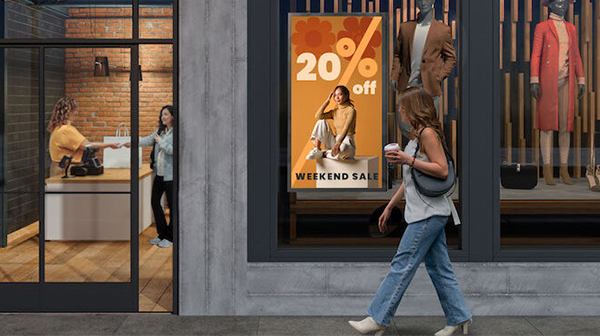
Retail stores contain a lot of visual information.
Packaging, shelving, price tags, displays, advertisements, and other customers are all competing for attention. Even when shoppers notice a product, they may not remember it later.
Digital signage can reinforce product names, imagery, features, and benefits throughout the store.
Retailers can use digital displays to:
- Demonstrate how a product works
- Highlight important features
- Show products in real-world settings
- Compare different models
- Introduce new merchandise
- Reinforce campaign imagery
- Explain what makes a product different
This can be especially valuable for products that are new, unfamiliar, complex, or easier to understand through a visual demonstration.
Consistent messaging across entrance displays, aisles, product areas, and checkout screens can also strengthen recognition as shoppers move through the store.
Quick retail digital signage checklist
A successful digital signage strategy requires more than installing screens.
Most effective retail environments include:
- Clear goals for each display
- Content designed for quick viewing
- Screens placed along the customer journey
- Consistent branding across locations
- A centralized content management platform
- Messaging tailored to the display’s location
- A process for keeping content current
- Technology that can scale as needs change
Every screen should have a purpose.
It should help a shopper discover something, understand something, find something, or take the next step.
If a display does not support one of those goals, it may be adding clutter rather than improving the experience.
The bottom line
Digital signage gives retailers a faster and more flexible way to communicate with customers.
It can help stores update content across multiple locations, better understand shopper interests, connect in-store visitors with online channels, encourage additional purchases, and make products more memorable.
When the displays, content, placement, and supporting technology are planned together, digital signage can create a more engaging customer experience while making retail marketing easier to manage.
Looking to take the next step?
If you’re considering digital signage for a retail store or planning an upgrade across multiple locations, explore LDI Connect’s Pro AV solutions or browse more of our Learning Center resources.